
Palacio Barolo: A Journey from Hell to Heaven in the Heart of Buenos Aires
Contributed By: Veronica Larraburu
PALACIO BAROLO, AN ARCHITECTURAL MASTERPIECE
An architectural masterpiece inspired by Dante’s Divine Comedy, where history, literature and imagination converge above the streets of Buenos Aires.
Rising above Avenida de Mayo, in the historic heart of Buenos Aires, this extraordinary building is one of the city's most fascinating architectural treasures. At first glance, its ornate façade and unusual silhouette catch your attention. But venture inside, and you begin to uncover a story that reaches far beyond architecture — a story of ambition, poetry, symbolism and a dream that would transform the Buenos Aires skyline.
A DREAM IMAGINED BY MARIO PALANTI
The story begins with two Italians who shared a fascination with literature and grand ideas.
Luis Barolo, an entrepreneur who arrived in Argentina in 1890, commissioned fellow Italian Mario Palanti to design a building unlike anything Buenos Aires had seen before. Construction began in 1919, and the palace was inaugurated in 1923, becoming a landmark of architectural innovation and one of the tallest buildings in South America at the time.
Palanti was not interested in creating just another office building. His vision drew inspiration from The Divine Comedy, Dante Alighieri's celebrated literary journey through Hell, Purgatory and Paradise.
The result was a remarkable architectural interpretation of the poem, incorporating symbolic references, eclectic European styles, monumental spaces and elements inspired by Indian architecture. Even the building's proportions reflect a fascination with the golden ratio.
There is also a captivating story behind Barolo's commission: he reportedly hoped to protect Dante's ashes from the wars he feared would devastate Europe. Although the poet's remains never came to Buenos Aires, the building preserves the spirit of that extraordinary ambition.
FROM HELL TO HEAVEN, ONE FLOOR AT A TIME
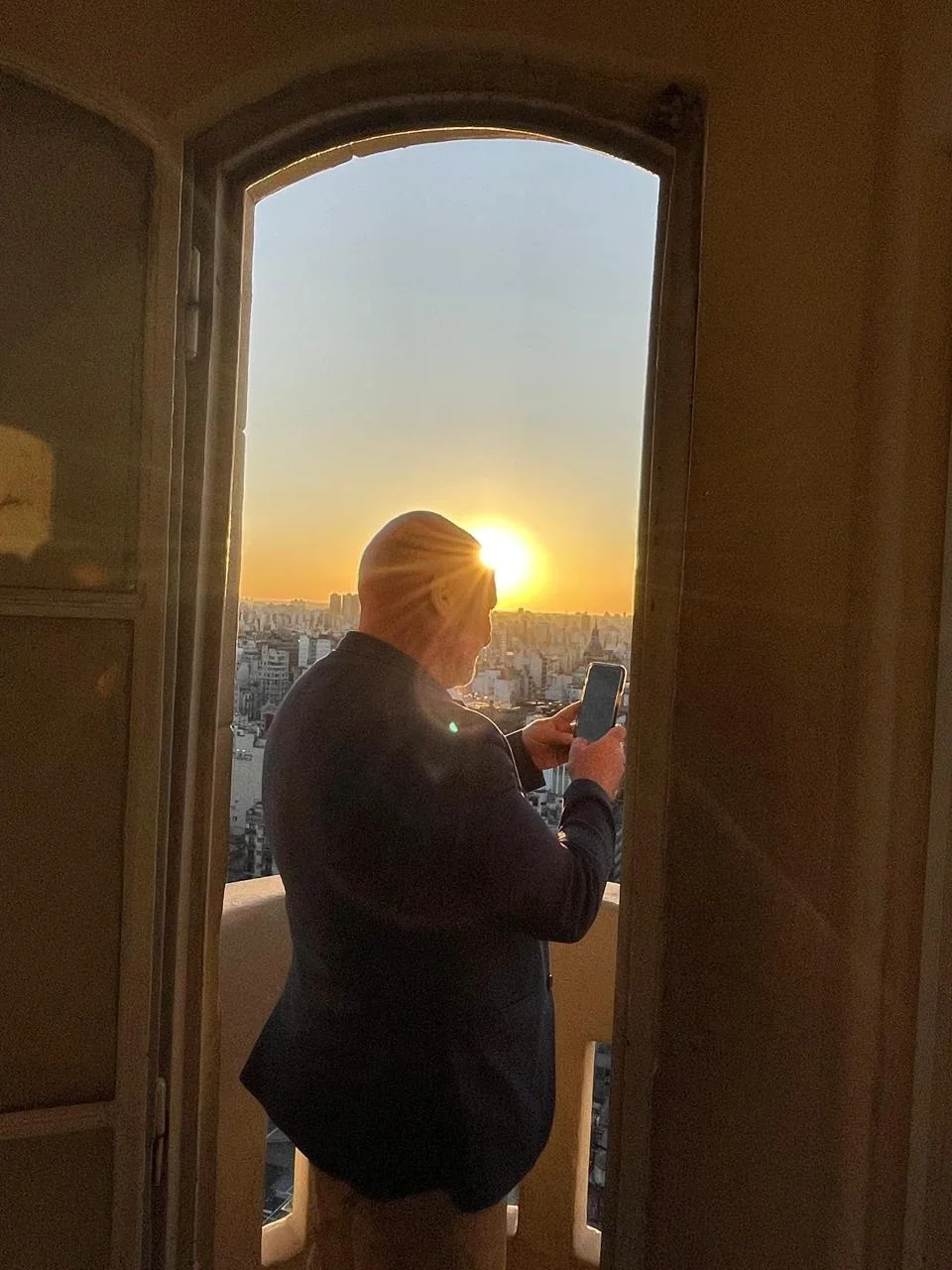
The most fascinating way to experience Palacio Barolo is to follow its symbolic journey upwards.
The entrance and lower levels evoke Hell, with imposing vaults and intricate architectural details that set a dramatic tone. As you ascend, the building represents Purgatory, a transitional world between darkness and light. Higher still, the architecture opens towards Heaven, culminating in the tower and its extraordinary lighthouse.
The symbolism continues in the numbers. The building reaches approximately 100 metres to the top of its lighthouse, echoing the 100 cantos of Dante's poem. Its 22 floors also reflect the literary structure associated with the work.
It is a building meant to be read as much as it is meant to be seen. Every transition, proportion and architectural detail offers another clue to Palanti's vision.
And this is precisely what makes a visit so rewarding: once you understand the story, you begin to see the building differently.
THE LIGHTHOUSE
Then comes the moment that makes the entire visit worthwhile.
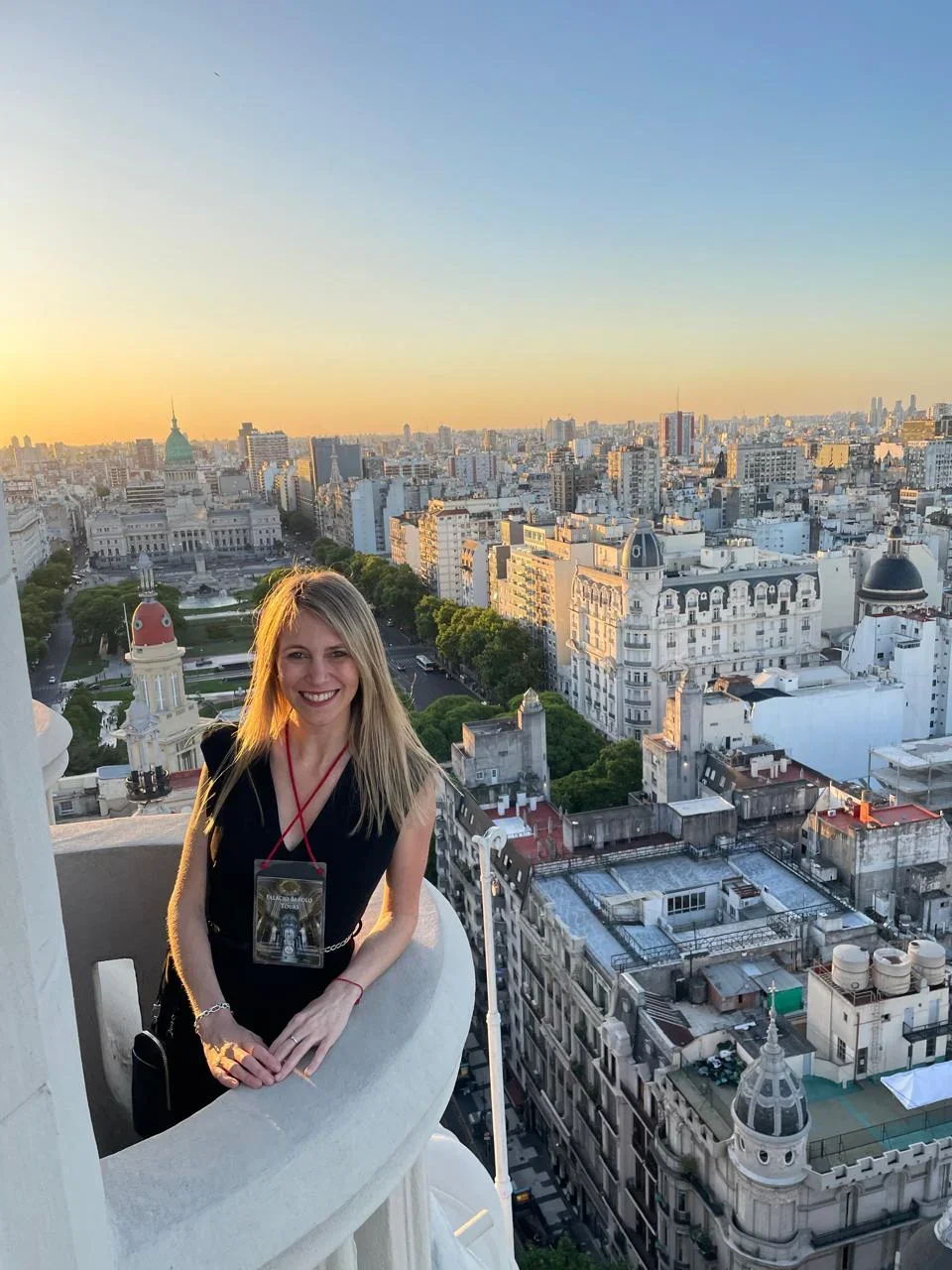
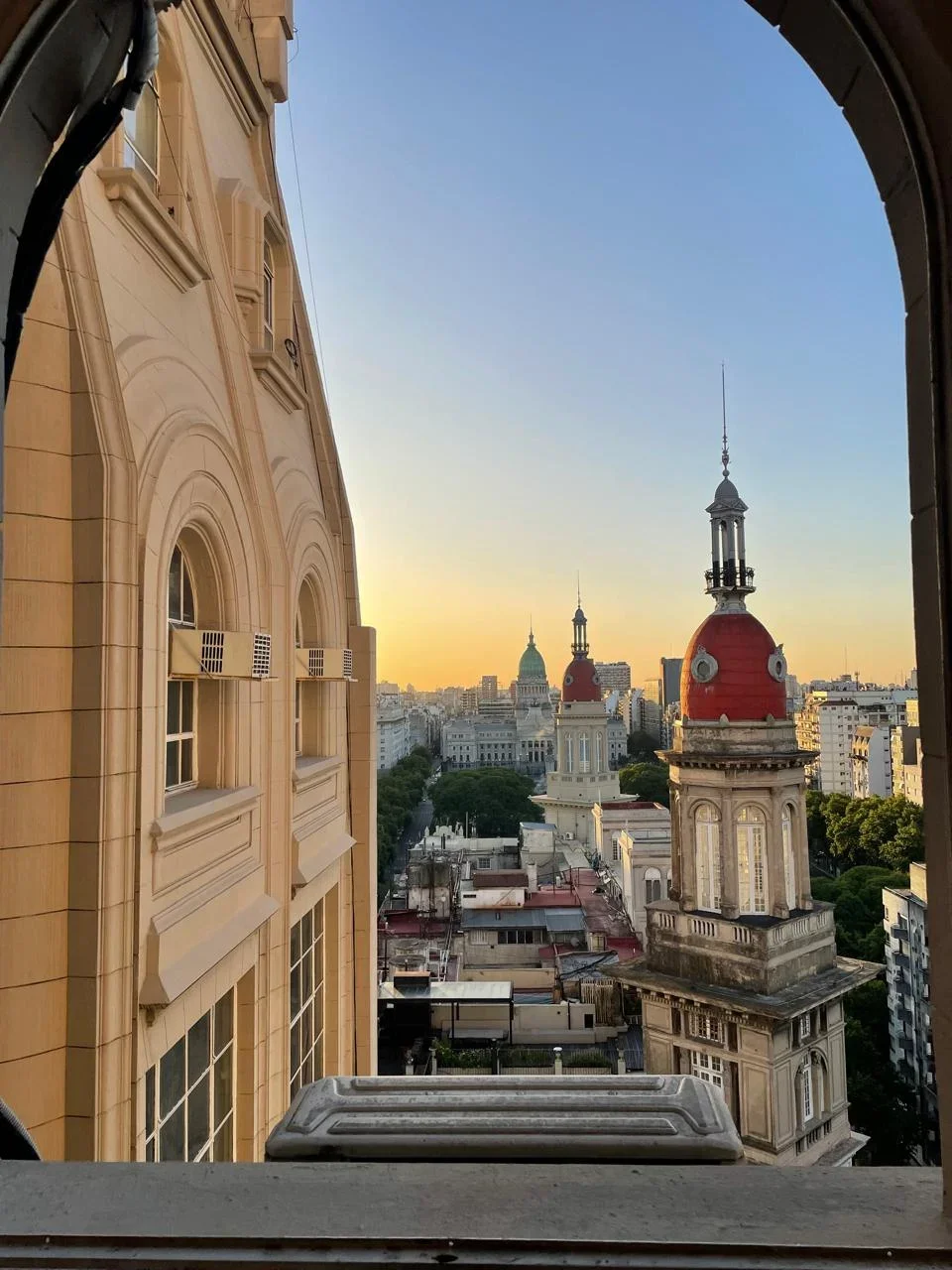
At the very top of Palacio Barolo, a lighthouse crowns the tower, offering sweeping views across Buenos Aires. Originally equipped with a powerful rotating light, it was designed to be visible across the Río de la Plata. In 1923, its light even announced the result of the famous boxing match between Argentine fighter Luis Ángel Firpo and American champion Jack Dempsey in New York. <Cite refs={["turn782212search1","turn782212search9"]}/>
Today, reaching the upper levels is a chance to leave the busy avenues behind and experience the city from an entirely different perspective.
And when the lighthouse is switched on, the building's story comes full circle.
After travelling symbolically through Hell and Purgatory, you arrive at Heaven — with the city stretching towards the horizon and the sky seemingly within reach.
It is a fitting finale to a visit that combines architecture, literature, history and wonder in a single experience.
WHY WE INCLUDE PALACIO BAROLO IN OUR BUENOS AIRES ITINERARIES
At Ann&Palm, we believe that discovering a city is about more than ticking off its landmarks. It is about understanding the ideas, people and stories that shaped it.
Palacio Barolo brings together so many layers of Buenos Aires: its European influences, its appetite for bold architectural expression, its cultural ambition and its ability to surprise even the most seasoned traveller.
For those who appreciate architecture, literature and history, it is a fascinating encounter. For everyone else, it is an invitation to look beyond the obvious and discover a side of the city they might otherwise miss.
We love pairing visits to Palacio Barolo with explorations of historic Buenos Aires, including Avenida de Mayo, its cafés and its remarkable architectural heritage. With the right guide, the experience becomes a conversation about the city itself — its past, its ambitions and the people who made it what it is today.
Because sometimes, the most memorable way to discover a destination is to climb a little higher, look a little closer and allow yourself to be drawn into its stories.
And at Palacio Barolo, the final chapter is written in light.
As the lighthouse illuminates the sky above Buenos Aires, you understand why this architectural jewel is so much more than a building. It is a dream in stone, a tribute to poetry and a reminder that even in the heart of a modern city, a little magic is still waiting to be discovered.
South America… Better Lived Than Imagined.